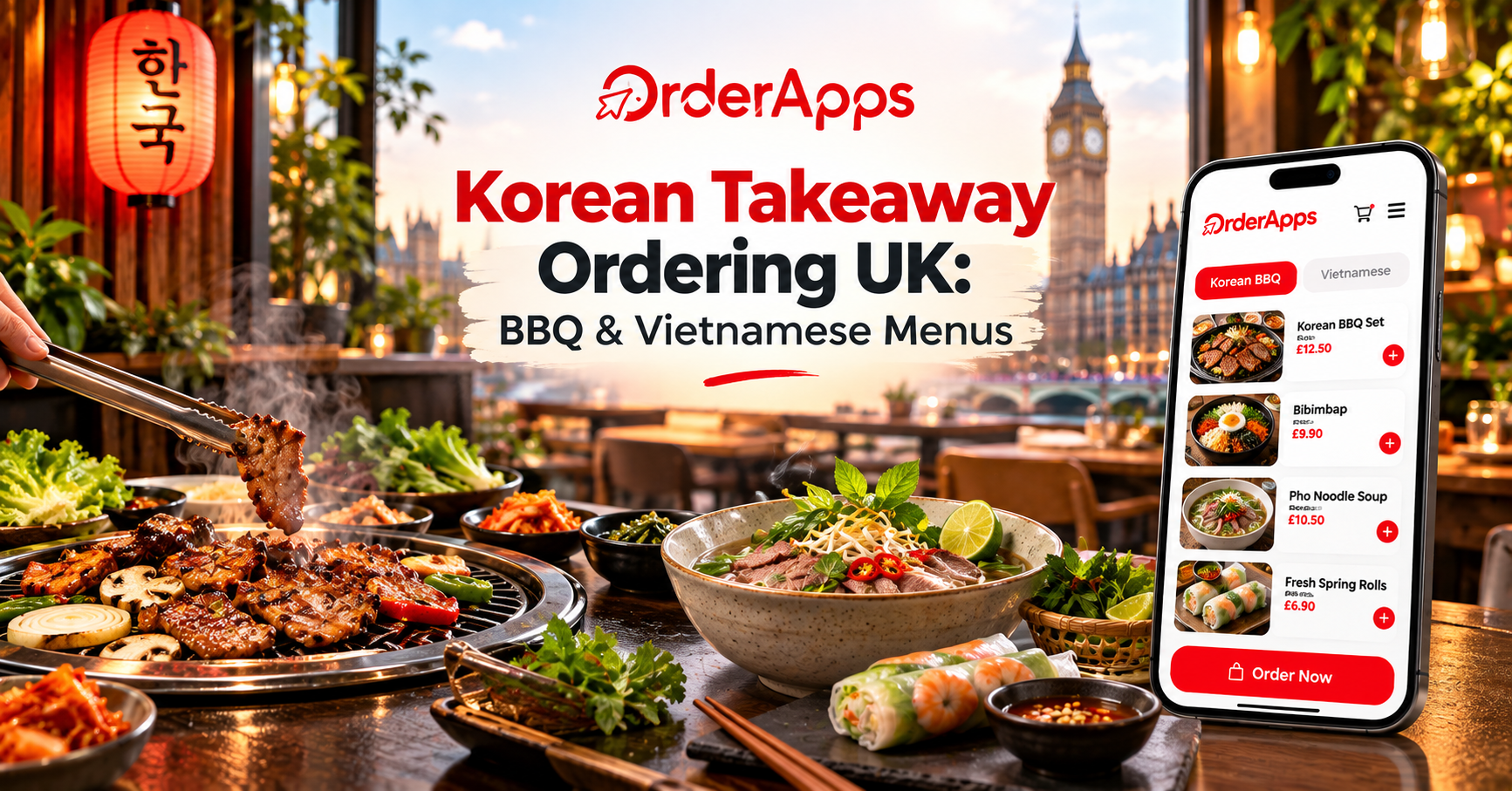
Korean takeaway ordering UK businesses can offer through their own website lets customers select meals, pay and arrange collection or delivery. For Korean BBQ and Vietnamese takeaways, a suitable system should capture proteins, sauces, sides and preparation details clearly, while keeping availability, prices and promised fulfilment times accurate.
A BBQ sharing platter and a bowl of pho need different menu choices and packing checks. Treating both as generic items leaves customers guessing and staff correcting orders.
As reviewed in October 2026, OrderApps lists branded takeaway websites and mobile apps. Its Starter plan costs £19 monthly, with a 3.9% transaction charge per order. This guide helps independent operators compare the practical requirements: menu structure, collection timing, delivery quality and the tests to run before launching direct ordering.
What does direct takeaway ordering mean?
Direct takeaway ordering means customers purchase through your business’s own ordering website or branded app. They browse the menu, choose available options, pay and arrange fulfilment. Your team receives the order through the provider’s supported workflow, while your business remains responsible for food preparation and the delivery arrangements it offers.
A marketplace remains useful for customers browsing nearby restaurants. Your own ordering page gives existing customers a clear route back to your business.
Compare subscriptions, transaction charges, payment processing and delivery costs. Direct ordering still has operating costs.
Korean takeaway ordering UK menu essentials
A Korean takeaway menu should explain the dish, portion and included sides before asking customers to customise it. Separate required selections from optional extras so prices and preparation instructions remain clear.
Make Korean BBQ sets unambiguous
State whether a BBQ order contains cooked food ready to eat or a meal kit requiring home cooking. Keep these product types clearly separated.
For a cooked sharing set, list:
- Included meats or available protein choices.
- Rice portions and side dishes.
- Sauces and any included garnishes.
- The intended serving size.
- Extra portions and their prices.
If customers select multiple proteins, check that the system enforces the correct number. Explain substitutions when a choice sells out.
Put choices against each dish
Capture fried chicken sauce, bibimbap protein and extra sides as structured options where supported. Two portions of the same dish may need different selections.
Explain spice options using your own recipes. Avoid promising that a mild selection removes chilli already present in a marinade.
Likewise, allow “sauce separately” only where the kitchen can fulfil it. Do not offer removal of ingredients already mixed into prepared components.
Keep dietary descriptions recipe-specific
Check marinades, sauces, kimchi and garnishes before adding dietary labels. A vegetable-based dish is not automatically vegan or allergen-free.
Use accurate product information and a clear route for allergy enquiries. Staff must review requests against ingredients and preparation practices.
Build a clearer Vietnamese takeaway menu
A Vietnamese ordering menu should distinguish soups, baguettes, noodle bowls and rice dishes. Describe broth, fillings and included accompaniments so customers know what arrives.
For pho, explain the protein and broth used. A tofu option should not imply vegetarian broth unless that is what your kitchen supplies.
For bánh mì, list the standard filling, sauce, pickles and herbs. Only offer exclusions your team can reliably make.
Use the dish’s familiar name alongside a short English description. For example, “Phở — rice noodle soup” helps new customers without replacing the original name.
Match menu choices to packing checks
Menu exampleCustomer informationPacking checkKorean BBQ sharing setProteins, portions and included sidesEvery component matches the setKorean fried chickenPortion size and sauce choiceSauce request matches the ticketBibimbapProtein, rice and supported extrasEach bowl’s choices remain identifiablePhoBroth, protein and accompanimentsSoup containers close securely; components match the orderBánh mìFilling, sauce and permitted exclusionsSandwich matches the agreed choices
These are examples to adapt to your recipes. They are not a universal menu specification.
Collection and delivery need different rules
Collection requires accurate pickup promises and a clear handover point. Delivery also requires address coverage, suitable packaging and enough time for the journey.
Set realistic busy-night promises
Base preparation estimates on your kitchen’s capacity, including walk-in demand. A family BBQ set may take different preparation work from a single sandwich.
Ask whether your provider can restrict order volume, adjust estimates or pause ordering. Test scheduled orders alongside immediate orders.
For multiple branches, customers should confirm the location before paying. Menus, opening hours and availability may differ.
Test delivery quality before expanding
Choose your delivery area using actual journey tests. Inspect pho for leaks, fried food for texture and complete meals for missing components.
The Food Standards Agency advises using appropriate food-grade packaging and well-fitting closures. Itsfood delivery guidance also explains that food must reach consumers safe and fit to eat.
Test presentation and food quality alongside your food-safety procedures. A successful checkout does not prove that a meal travels well.
Make allergen information accessible
For online food sales, allergen information must be available before purchase and when the food is delivered. The Food Standards Agency recommends written information at both stages in itsallergen guidance.
Scottish operators should also consultFood Standards Scotland’s guidance. Keep information accurate for sauces, extras and substitutions; an allergy notes box alone is insufficient.
How OrderApps supports direct takeaway orders
OrderApps offers branded websites and mobile apps for UK takeaway businesses. Assess these services using your actual Korean BBQ or Vietnamese menu rather than a generic demonstration.
Itstakeaway ordering solution advertises delivery and collection, delivery-zone settings and busy-night order controls. Ask how those controls work for your location and plan.
Theonline ordering software offers menu editing and central order management. Confirm required choices, bundle rules and ticket layouts before uploading complex meals.
For regular customers,branded ordering apps provide an additional buying channel. Keep browser ordering available so new customers can order through a link.
Compare the complete cost
OrderApps’ published prices, reviewed on 9 October 2026, start at £19 monthly with a 3.9% transaction charge. Growth lists £29.99 monthly and 1.9%, including branded mobile apps.
Check the currentplans and transaction charges. Confirm payment processing, applicable VAT, hardware and delivery costs separately.
Also ask for confirmation of compatibility with your existing POS. Public pages describe integration availability differently, so verify your exact setup before committing.
Test one complete takeaway order
Place a realistic mixed order and follow it through checkout, preparation and handover. This reveals problems that an attractive menu preview cannot show.
Use this illustrative acceptance test, adapting the dishes to your own menu:
- Build the basket. Add a sharing set, two dishes with different options and an extra side.
- Check the total. Confirm optional charges, bundle inclusions and delivery fees before payment.
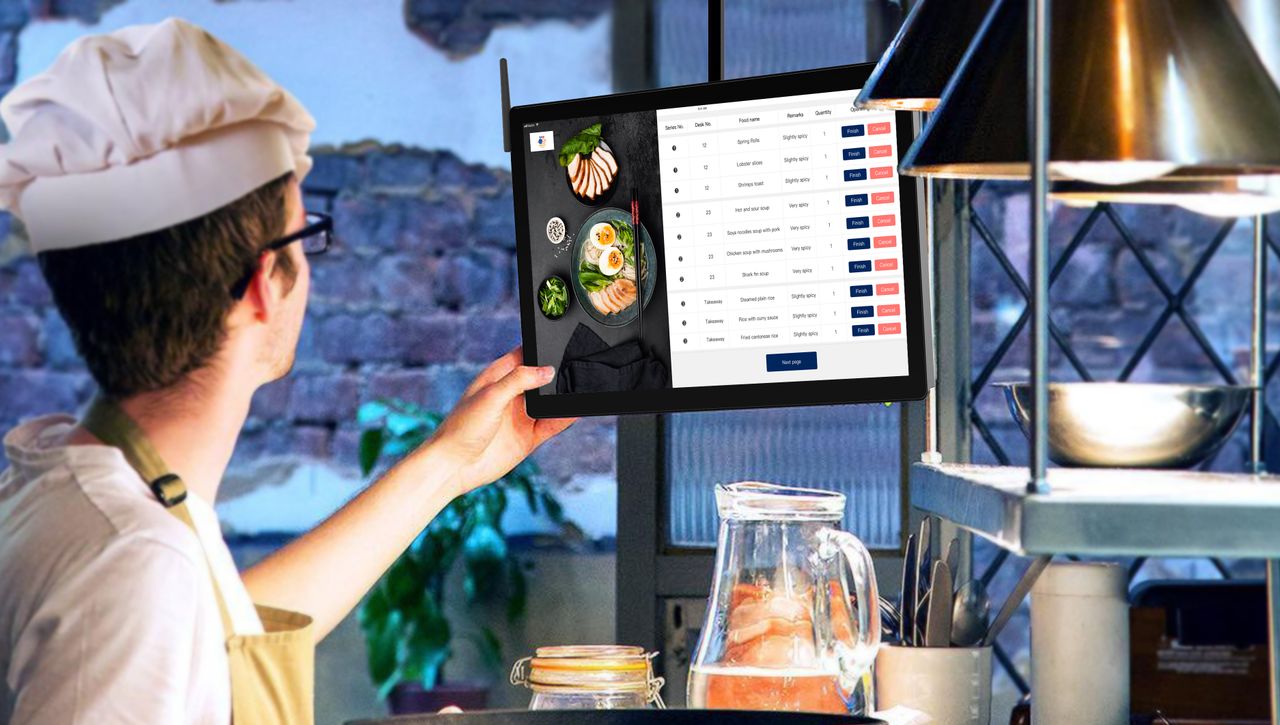
- Inspect the kitchen order. Each dish must show its own choices, quantity and fulfilment details.
- Pack against the ticket. Check every meal component, sauce and side before sealing the bag.
- Test an unavailable item. Ensure sold-out choices cannot still be purchased.
- Practise a change or refund. Check staff access and how the customer receives confirmation.
This is a proposed test, not a reported OrderApps customer result. Record any manual steps and decide whether they are manageable during peak service.
Frequently asked questions
Can Korean BBQ restaurants take orders online?
Yes, Korean BBQ restaurants can take online orders for meals suitable for collection or delivery. Describe whether the food arrives cooked or requires home preparation. List portions, protein choices and included sides clearly, then test whether the ordering system captures every selection accurately for the kitchen.
Can one system manage Vietnamese takeaway dishes?
Yes, an ordering system can manage pho, bánh mì, noodle bowls and rice dishes when its menu controls suit your operation. Create separate categories and recipe-specific choices. Check broth descriptions, extra charges and packing instructions so staff can fulfil the order without interpreting unclear customer notes.
Do takeaway customers need to download an app?
No, customers can order through a mobile-friendly website when your provider supports browser checkout. A branded app offers another channel for regular customers. Keep the website easy to access through your existing site, social profiles and packaging so first-time customers can order without installing anything.
Can customers customise sauces and sides?
Yes, where the ordering system supports those choices and your kitchen can prepare them. Use separate options with clear prices and selection limits. Restrict changes to ingredients that remain adjustable, and check that each dish’s specification appears accurately on staff screens or printed preparation tickets.
Is direct ordering cheaper than marketplace ordering?
It can be, but compare the complete cost at your expected sales volume. Include subscriptions, transaction charges, payment processing, delivery and marketing. Marketplaces may provide discovery or courier services that your direct channel needs separately. Evaluate the cost of fulfilling an order, rather than one advertised fee.
Bring your menu into direct online ordering
Effective online ordering connects clear menu choices with accurate preparation, packing and fulfilment. Korean BBQ sets and Vietnamese dishes need recipe-specific controls, realistic timing and complete order details.
Want to assess your own menu?Book a free OrderApps demo and bring your meal bundles, dish options and busiest-service requirements.
Ready to grow your food business?
Online ordering system, a branded restaurant ordering app, table booking and EPOS on one platform, with plans from £19/month.