StartFragment
Your EPOS system sits at the centre of your restaurant.
It records sales, takes payments, sends orders to the kitchen and gives your team the information they need to serve customers. A modern system may also manage online orders, table orders, deliveries, discounts, staff activity and sales reports.
Choosing the wrong EPOS system can create more work instead of reducing it.
Your staff may need to enter the same order twice. The kitchen may receive incomplete tickets. Online orders may arrive on separate tablets. Reports may not match payment totals. Support may be unavailable when the system fails during your busiest service.
The best EPOS system is not simply the one with the longest feature list.
It is the system that fits how your restaurant ortakeawayactually operates.
This guide explains what to compare, which questions to ask and how to choose an EPOS system that can support your business now and as it grows.
What Is an EPOS System?
EPOS stands for Electronic Point of Sale.
It is the combination of software and hardware used to record orders, calculate totals, accept payments and track sales.
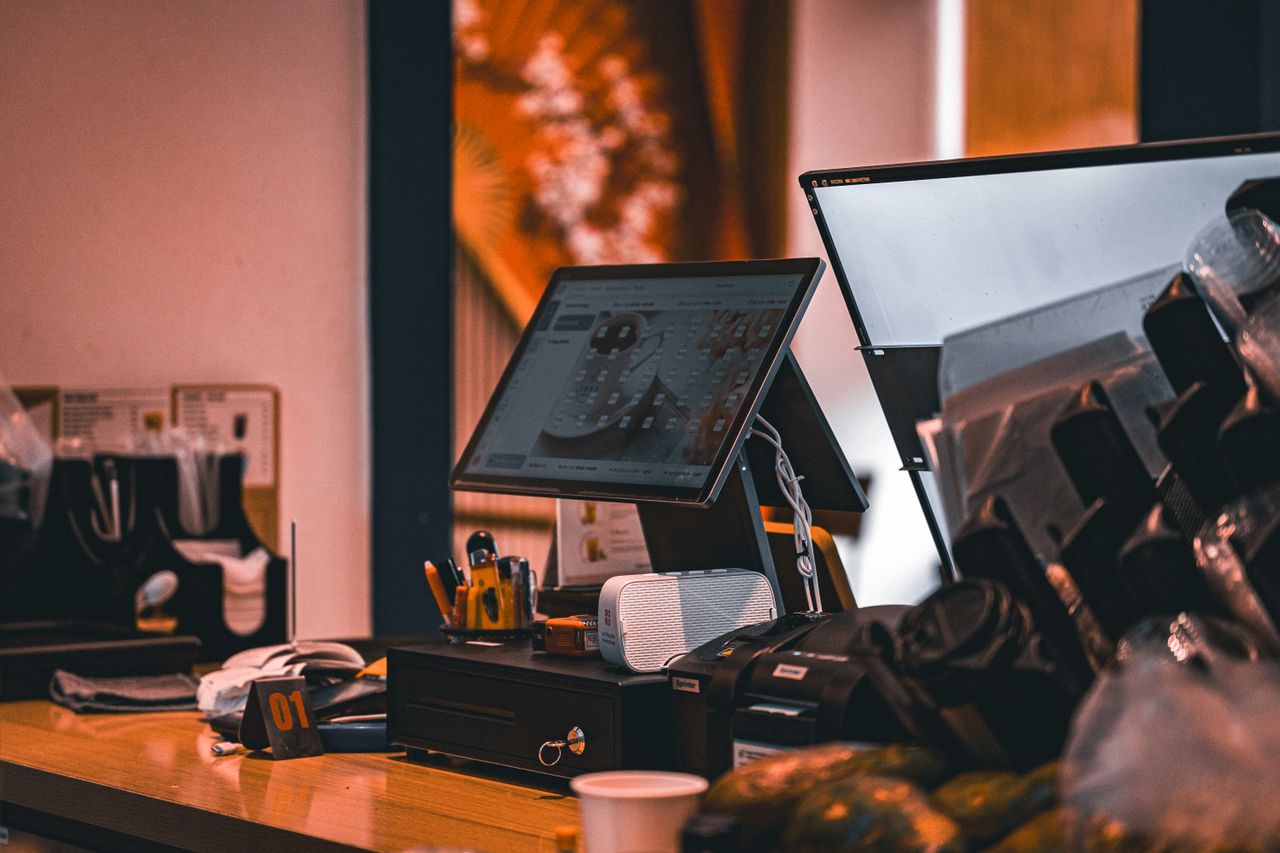
A basic EPOS setup may include:
- A touchscreen till
- EPOS software
- A cash drawer
- A card reader
- A receipt printer
- A kitchen printer
- A customer-facing display
A more advanced restaurant EPOS system may also include:
- Kitchen display screens
- Online ordering
- Delivery and collection management
- QR table ordering
- Table reservations
- Menu management
- Stock tracking
- Customer loyalty
- Staff permissions
- Multi-location reporting
- Accounting integrations
OrderApps describes its EPOS as an all-in-one restaurant system that brings counter, table, phone and online orders into one place, with kitchen printing, payments and reporting connected to the same workflow.
What Is the Difference Between POS and EPOS?
POS means point of sale. It can refer to the place where a transaction happens or the system used to complete it.
EPOS usually refers to an electronic system that records and manages those transactions digitally.
In practice, providers often use POS and EPOS to describe the same type of restaurant technology. The product’s actual features matter more than which term appears on the website.
Why Restaurants Need a Specialist EPOS System
A general retail till may be able to sell a fixed product, take payment and print a receipt.
Restaurant service is more complicated.
A restaurant order might include:
- Different courses
- Product modifiers
- Cooking preferences
- Allergy notes
- Table numbers
- Seat numbers
- Split bills
- Service charges
- Kitchen routing
- Bar routing
- Takeaway packaging
- Delivery details
A takeaway may receive orders from walk-in customers, phone calls, its own website and several marketplace apps at the same time.
The EPOS system must organise these orders without slowing down the team.
A restaurant-specific system should understand food-service workflows rather than forcing the business to work like a conventional shop.
Start with Your Restaurant’s Actual Needs
Do not begin by comparing software packages.
Start by mapping how your business works.
Write down every way an order can enter your restaurant.
For example:
- A customer orders at the counter.
- A waiter takes an order at the table.
- A customer calls the restaurant.
- A customer orders from your website.
- A customer orders from your mobile app.
- A guest uses a QR code at the table.
- A marketplace sends an order.
- A customer schedules a collection.
Then follow each order through the business.
Ask:
- Who receives it?
- Does someone need to enter it manually?
- Where is payment taken?
- Which kitchen station prepares it?
- How does the customer receive an update?
- How is the sale recorded?
- How is a refund processed?
- Where does the order appear in reports?
This exercise reveals the problems your new EPOS system needs to solve.
1. Choose an EPOS System Built for Food Businesses
Restaurant EPOS software should support menus with multiple layers.
A customer may choose a pizza, select a size, remove an ingredient, add extra cheese and choose a drink. The system must record every choice clearly.
Look for support for:
- Categories and subcategories
- Product variants
- Required and optional modifiers
- Add-ons
- Meal deals
- Combo offers
- Cooking instructions
- Allergy notes
- Product availability
- Time-based menus
- Different dine-in and takeaway prices
During the demonstration, ask the provider to build one of your most complicated real orders.
Do not accept a demonstration that only shows a simple coffee or single-item sale.
2. Make Sure Every Order Reaches One System
One of the biggest restaurant technology problems is tablet overload.
A restaurant may have one device for direct orders, another for a delivery marketplace, a separate booking system and a till that staff use for walk-in sales.
Employees then copy orders manually from one system to another.
This creates several risks:
- Missed orders
- Duplicate orders
- Incorrect items
- Wrong prices
- Delayed kitchen tickets
- Inaccurate reporting
A connected EPOS system should bring relevant order channels into one operational view.
OrderApps states that its EPOS can combine online, in-store and phone orders on one screen. It is also designed to work with the restaurant’s branded website, mobile app and table-booking tools.
When evaluating any provider, confirm exactly which channels connect directly.
Ask whether the integration is:
- Already available
- Included in your plan
- Supplied by a third party
- Charged separately
- Still being developed
- Limited to certain hardware
Do not assume that a logo on an integrations page means every feature is fully supported.
3. Test the System During a Simulated Rush
A system that looks impressive in a quiet demonstration may feel completely different during a Friday evening rush.
Your staff need to take orders quickly with minimal taps.
Test common tasks such as:
- Opening a table
- Adding several customers
- Applying modifiers
- Removing an item
- Moving an order to another table
- Splitting a bill
- Adding a service charge
- Processing a refund
- Reprinting a kitchen ticket
- Marking an item unavailable
- Switching from dine-in to takeaway
The best interface is not necessarily the most attractive one.
It is the one your team can use accurately when several customers are waiting.
OrderApps promotes a touchscreen interface designed to help staff take orders quickly and keep queues moving during busy service.
4. Check Kitchen Printing and Order Routing
An order should reach the correct preparation area immediately.
A drinks order may need to go to the bar. A pizza may go to one kitchen station, while a dessert goes to another.
A suitable restaurant EPOS system should allow you to route items by:
- Product
- Category
- Preparation station
- Floor
- Location
- Order type
You may choose kitchen printers, kitchen display screens or a mixture of both.
Kitchen printers
Printed tickets are familiar and simple.
Check whether the system can:
- Print automatically
- Show the table or order number
- Display modifiers clearly
- Highlight allergy notes
- Print duplicate tickets
- Route items to several printers
- Continue working when the internet fails
Kitchen display systems
Kitchen display screens can organise orders by preparation status.
They may allow staff to mark orders as:
- Received
- Preparing
- Ready
- Completed
Before selecting a screen-based workflow, make sure it is practical for your kitchen environment. Consider heat, steam, grease, available space and how staff will interact with the screen.
OrderApps lists instant kitchen receipt printing and order status updates among its EPOS capabilities.
5. Confirm Which Payment Methods Are Supported
Customers expect flexible payment options.
Your EPOS should support the payment methods your business accepts, such as:
- Cash
- Debit cards
- Credit cards
- Contactless payments
- Apple Pay
- Google Pay
- Online payments
- Gift cards
- Vouchers
- Split payments
Card-present payments happen when the customer uses a physical card or compatible digital wallet at the point of sale. Online orders are normally treated differently because the customer and card are not physically present at the till.
Ask the provider:
- Is the card reader integrated with the till?
- Does the amount transfer automatically?
- Can staff accidentally enter a different amount?
- Which payment processor is used?
- How long do payouts take?
- What happens when a payment fails?
- How are chargebacks managed?
- Can payments be refunded from the EPOS?
- Are online and in-person rates different?
- Is there a minimum monthly charge?
An integrated terminal reduces manual entry. The till sends the correct amount to the card reader, and the payment result returns to the order.
6. Review Payment and Data Security
An EPOS system may process payment information, customer contact details, delivery addresses and staff records.
Security should not be treated as an optional feature.
PCI DSS is the payment-card industry standard intended to protect card account data. It applies across organisations involved in card processing, including merchants and service providers. Even small merchants should confirm their obligations with their payment provider or acquiring bank.
Ask the EPOS provider:
- Is the payment hardware PCI approved?
- Does the business ever store full card details?
- How is payment information encrypted?
- Who is responsible for PCI compliance?
- Are software updates automatic?
- Is multi-factor authentication available?
- Can staff accounts have separate permissions?
- Are logins and actions recorded?
- What happens after a suspected data breach?
- How frequently is data backed up?
The PCI Security Standards Council recommends using approved point-of-interaction devices and managing payment equipment according to the applicable security requirements.
UK data-protection principles also require personal information to be kept securely. The ICO recommends practical controls such as multi-factor authentication and clear responsibility for information security.
7. Check What Happens When the Internet Fails
An internet outage should not automatically stop the entire restaurant.
Ask whether the EPOS has an offline mode.
A useful offline mode may allow staff to:
- Continue entering orders
- Print kitchen tickets
- Record cash transactions
- Store data locally
- Synchronise transactions after reconnection
Payment capability during an outage depends on the payment provider, terminal and configuration. Do not assume offline card payments will always be available.
Ask the provider to demonstrate an internet failure rather than simply promising that the system works offline.
OrderApps says its EPOS can continue processing orders during an internet interruption and synchronise them when the connection returns. Confirm the exact offline functions available for your chosen hardware and payment setup.
8. Look for Fast Menu Management
Restaurant menus change regularly.
You may need to:
- Update a price
- Add a seasonal item
- Remove a sold-out dish
- Change a modifier
- Introduce a meal deal
- Edit an allergy note
- Create a lunch menu
- Change availability by location
If your business uses several ordering channels, updating each one separately wastes time and increases the chance of inconsistent information.
A connected EPOS should let you update the menu centrally and apply changes across relevant channels.
OrderApps says that menu and price changes made in its system can be applied across the till and connected ordering channels.
During your demonstration, ask the provider to:
- Change a product price.
- Mark an item sold out.
- Add a new modifier.
- Restrict an item to certain hours.
- Apply the changes to online ordering.
- Reverse the changes.
This shows how much work menu management will require in real life.
9. Evaluate Online Ordering Integration
Your own ordering website should not operate as an isolated system.
A strong EPOS integration can:
- Send online orders directly to the kitchen
- Apply the correct menu and prices
- Manage delivery and collection
- Update product availability
- Record payments
- Include online sales in reports
- Reduce manual order entry
OrderApps includes a branded online ordering website and built-in point of sale across its published plans. It states that direct orders and in-store transactions can be managed within the same restaurant platform.
Ask how the EPOS handles:
- Scheduled orders
- Delivery zones
- Minimum order values
- Busy-period throttling
- Collection times
- Customer notifications
- Cancelled orders
- Online refunds
- Failed payments
- Menu availability
For takeaways, the ability to manage walk-in, phone and online orders from one queue can be more valuable than a long list of unrelated features.
10. Check Table Management Features
Full-service restaurants need more than a basic till.
Your EPOS may need to support:
- Floor plans
- Table status
- Open tables
- Seat numbers
- Course management
- Moving tables
- Merging tables
- Splitting bills
- Partial payments
- Tips and service charges
- Reservations
- QR table ordering
Ask whether table information updates in real time across every device.
For example, if a customer orders another drink through a QR code, does it appear on the existing table bill or create a separate order?
OrderApps connects its restaurant platform with table reservations and QR or NFC table ordering on qualifying plans. Its table-ordering feature allows customers to order and pay from their phone while the order is associated with the relevant table.
11. Review Takeaway and Delivery Features
A takeaway EPOS system needs different controls from a fine-dining restaurant.
Useful takeaway features include:
- Delivery and collection options
- Customer address records
- Postcode or zone validation
- Delivery charges
- Minimum order rules
- Estimated preparation times
- Scheduled orders
- Driver assignment
- Customer order history
- Telephone order entry
- Kitchen printing
- Busy-period controls
OrderApps presents its takeaway EPOS as a system that can place online, phone and walk-in orders on one screen and send them directly to kitchen printing.
Ask whether delivery management is included in the EPOS or requires another service.
Also confirm whether the provider supplies drivers. An EPOS system may organise delivery orders without providing the courier who completes them.
12. Compare Reporting and Analytics
Your EPOS should help you understand what is happening in the business.
Useful reports include:
- Total sales
- Sales by hour
- Sales by day
- Sales by location
- Sales by order channel
- Sales by product
- Sales by category
- Best-selling items
- Discounts
- Refunds
- Voids
- Payment types
- Staff activity
- Tax totals
- Average order value
OrderApps says its EPOS provides live reporting across in-store and online orders, including best sellers, quiet periods, discounts, refunds and staff activity. It also supports management of one or several locations from the same dashboard.
Reports should be easy to understand and export.
During the demonstration, ask the provider to show how you would answer a real question, such as:
Which five products generated the most sales last month, and how many were sold through delivery rather than in-store?
If the provider cannot produce a useful answer during the demonstration, the reporting may not meet your needs.
13. Check VAT and Accounting Requirements
Your EPOS records may feed into your bookkeeping and VAT process.
Ask whether the system connects to your accounting software or exports data in a usable format.
Possible accounting features include:
- Daily sales summaries
- VAT breakdowns
- Payment reconciliation
- Refund records
- Cash totals
- Tips
- Service charges
- Exportable reports
- Accounting integrations
VAT-registered businesses covered by Making Tax Digital must keep certain VAT records digitally. HMRC guidance also explains that businesses using a retail scheme may need to keep digital records of daily gross takings.
Your accountant should review the proposed workflow before you switch systems.
An EPOS provider may supply sales data, but your business remains responsible for keeping accurate accounting and tax records.
14. Consider Staff Management and Permissions
Not every employee should have access to every function.
A suitable EPOS system should let you control who can:
- Apply discounts
- Cancel an order
- Process refunds
- Open the cash drawer
- Change prices
- View reports
- Export customer information
- Edit staff accounts
- Access several locations
Individual staff logins create accountability.
The system should record important actions such as:
- Refunds
- Voids
- Price changes
- Discounts
- Cash-drawer openings
- Manual payment adjustments
Avoid using one shared manager password for the entire team.
15. Ask About Customer Data
Some EPOS systems collect customer information through online orders, delivery orders, bookings or loyalty programmes.
Before choosing a provider, understand:
- What customer information is collected
- Why it is collected
- Where it is stored
- How long it is retained
- Who can access it
- Whether it is shared
- How it can be exported
- What happens when the contract ends
- How customer requests are handled
UK data-protection rules require businesses to collect only the personal information they need, protect it appropriately and avoid keeping it longer than necessary.
Ask whether you can export your customer data in a usable format if you change providers.
A system should not trap your restaurant’s operational and customer records inside a platform you can no longer access after cancellation.
16. Compare Hardware Carefully
EPOS hardware can include:
- Main till
- Tablet
- Card terminal
- Cash drawer
- Receipt printer
- Kitchen printer
- Kitchen display screen
- Customer display
- Barcode scanner
- Router
- Backup device
Ask whether you are:
- Buying the hardware
- Renting it
- Leasing it
- Receiving it as part of the subscription
Find out what happens if a device breaks.
Questions to ask include:
- Who owns the hardware?
- Is there a warranty?
- How quickly is replacement equipment sent?
- Can you use existing devices?
- Must you purchase approved hardware?
- Is installation included?
- Are repairs charged separately?
- Can the hardware work with another EPOS provider?
- What happens to rented equipment after cancellation?
A low monthly software price may become expensive when mandatory hardware and long leases are added.
17. Calculate the Total Cost, Not Just the Monthly Fee
EPOS pricing can include several separate costs.
Request a written breakdown covering:
- Software subscription
- Setup fee
- Hardware purchase
- Hardware rental
- Installation
- Training
- Payment-processing charges
- Transaction fees
- Additional tills
- Additional locations
- Kitchen printers
- Kitchen display licences
- Online ordering
- Delivery integrations
- Marketplace integrations
- Accounting integrations
- Support
- Updates
- Replacement equipment
- Contract cancellation
- Data export
Use this calculation:
Monthly software cost + estimated transaction costs + hardware cost + integration fees + support costs = estimated monthly EPOS cost
Then compare the cost with the operational value.
A slightly more expensive system may be worthwhile if it removes manual order entry, reduces mistakes and combines several separate subscriptions.
18. Review the Contract Before Signing
Do not rely on a sales conversation.
Read the written agreement carefully.
Check:
- Minimum contract length
- Renewal rules
- Cancellation notice
- Early termination charges
- Price-increase terms
- Hardware ownership
- Data export
- Support response times
- Service availability
- Payment-processing commitments
- Integration guarantees
Be cautious when the payment contract and EPOS contract have different lengths.
You may be able to cancel the software but remain tied to a separate card-terminal agreement.
OrderApps currently states that its plans have no long-term contract and can be upgraded, downgraded or cancelled. Its published plans also include a one-time setup fee. Confirm the applicable terms before subscribing.
19. Test the Quality of Support
Restaurant technology problems rarely occur at a convenient time.
Ask:
- What support hours are available?
- Is weekend and evening support included?
- Can you speak to a person?
- Is support based in the UK?
- Is emergency assistance available?
- How quickly are urgent issues answered?
- Is remote troubleshooting available?
- Is onsite support available?
- Is training included?
- Is priority support charged separately?
Create a realistic scenario during the sales process:
It is 8 pm on Saturday. Orders are not printing in the kitchen. What do we do, and how quickly can someone help?
The answer will tell you more than a general promise of excellent customer service.
OrderApps lists dedicated support on all plans and priority support on its Growth and Premium plans.
20. Choose a System That Can Grow
Your current requirements may change.
A single takeaway could open a second branch. A café could introduce delivery. A restaurant might add QR table ordering or a mobile app.
Look for a system that supports:
- Additional tills
- New locations
- Central menu management
- Location-specific prices
- Multi-site reporting
- User permissions
- Branded online ordering
- Mobile apps
- Loyalty programmes
- Table booking
- Table ordering
OrderApps is designed to manage one or multiple locations through a central dashboard and offers different packages for online ordering, mobile apps, reservations, table ordering and automated marketing.
Ask how the cost changes when you add a second or third location.
Restaurant EPOS vs Takeaway EPOS
The best system depends on your service model.
A full-service restaurant should prioritise:
- Table plans
- Seat and course management
- Split bills
- Service charges
- Reservations
- QR table ordering
- Bar and kitchen routing
- Staff permissions
A takeaway should prioritise:
- Fast counter ordering
- Phone orders
- Delivery zones
- Collection times
- Kitchen printing
- Online-order integration
- Customer addresses
- Busy-period controls
A café should prioritise:
- Fast touchscreen ordering
- Product modifiers
- Contactless payments
- Collection pre-orders
- Loyalty
- Simple stock visibility
- Quick staff training
A multi-location group should prioritise:
- Central menu management
- Consolidated reporting
- Location permissions
- Remote access
- Location-specific pricing
- Scalable hardware
- Reliable support
Avoid paying for features your business will never use. But make sure the system can add important features later.
Questions to Ask During an EPOS Demonstration
Bring this checklist to every demonstration:
- Can you build our actual menu?
- Can you process our most complicated order?
- How many taps does a normal order require?
- Can online, table, phone and walk-in orders appear together?
- How are orders sent to different kitchen stations?
- What happens when the internet fails?
- Can we continue accepting payments?
- Which card terminals are supported?
- What are the complete payment charges?
- Can staff split bills?
- Can we process partial refunds?
- Can products be marked unavailable instantly?
- Do menu changes update online?
- Can we export reports?
- Does it integrate with our accounting software?
- Who owns our customer data?
- Can we export our data after cancellation?
- What hardware is required?
- Who owns the hardware?
- What are the support hours?
- What is the total contract length?
- What does cancellation cost?
- Which integrations are live today?
- Which advertised features are still being developed?
- Can we test the system before signing?
Ask the salesperson to demonstrate the answers wherever possible.
Common EPOS Buying Mistakes
Choosing based only on price
The cheapest system may create additional work or require expensive add-ons.
Buying too many features
A complex system can slow down staff when most features are never used.
Ignoring payment-processing costs
A low software fee may be connected to higher transaction charges.
Not testing real orders
A simple demonstration does not show how the system handles your menu.
Assuming every integration is available
Confirm whether each connection is live, supported and included.
Forgetting offline operation
Internet failure can expose weaknesses that are invisible during a normal demonstration.
Ignoring support hours
Restaurant problems often happen at night and on weekends.
Signing a long contract too quickly
Review renewal, cancellation, hardware and payment terms first.
Failing to plan data migration
Menus, customers, gift balances and sales records may need to be moved.
How to Switch EPOS Systems Safely
Changing systems requires planning.
Export your existing data
Before cancelling your current provider, export:
- Menus
- Product prices
- Customer data
- Loyalty balances
- Gift-card balances
- Staff records
- Sales reports
- Tax reports
Clean your menu
Remove duplicated products, old modifiers and inactive offers before importing them.
Build the new system
Configure:
- Menus
- Prices
- VAT settings
- Printers
- Kitchen routing
- Staff permissions
- Payment terminals
- Delivery rules
Test every order type
Test:
- Cash
- Card
- Online payment
- Dine-in
- Collection
- Delivery
- Refund
- Discount
- Split bill
- Scheduled order
Train the team
Staff should practise before the system goes live.
Run a controlled launch
Launch during a quieter period if possible.
Keep access to the old system and printed backup information during the transition.
Review the first week
Check:
- Sales totals
- Payments
- Refunds
- Printer routing
- Online orders
- Staff feedback
- Customer issues
Correct problems before they become normal habits.
How OrderApps EPOS Supports Restaurants and Takeaways
OrderApps offers a built-in EPOS system as part of its wider ordering platform for UK food businesses.
Its published EPOS features include:
- Counter, table, phone and online order management
- Cash, card and contactless payments
- Kitchen receipt printing
- Order status updates
- Central menu and price management
- Offline ordering with later synchronisation
- Live sales reporting
- Discount and refund tracking
- Staff activity reporting
- Multi-location management
The system is designed to connect with OrderApps branded ordering websites, mobile apps, table bookings and QR or NFC table ordering.
As of July 2026, OrderApps lists built-in point of sale on all three published plans:
- Starter: £19 per month with a 3.9% transaction charge
- Growth: £29.99 per month with a 1.9% transaction charge
- Premium: £39.99 per month with a 1.49% transaction charge
A one-time £99 setup fee is also listed. Growth adds branded mobile apps and reservations, while Premium adds QR and NFC table ordering plus automated email and push marketing.
OrderApps currently presents its own built-in EPOS as available. Its FAQ separately states that integration with existing third-party POS systems is still being developed. Restaurants already using another POS should therefore confirm compatibility and migration requirements directly before changing systems.
Frequently Asked Questions
What is the best EPOS system for a restaurant?
The best system is one that matches your service model, menu complexity, payment setup, kitchen workflow and ordering channels.
A full-service restaurant may prioritise table management, while a takeaway may need delivery controls and fast online-order processing.
How much does a restaurant EPOS system cost?
Costs vary by provider, hardware, number of tills, payment processing, integrations and contract terms.
Compare the total cost rather than only the monthly software price.
Does an EPOS system need internet access?
Many cloud-based systems use the internet for synchronisation, online orders and reporting.
Some offer an offline mode for basic ordering. Ask the provider to demonstrate exactly what remains available during an outage.
Can an EPOS connect to online ordering?
Yes, many restaurant systems connect to websites, apps or delivery platforms.
Confirm which integrations are live and whether extra charges apply.
Can an EPOS send orders directly to the kitchen?
A restaurant EPOS can send items to kitchen printers or display screens.
A well-configured system can route different products to different preparation stations.
Does EPOS software include card payments?
Not always.
The system may integrate with a separate payment processor and card terminal. Request a complete breakdown of payment fees, hardware costs and payout times.
Is EPOS data covered by UK GDPR?
Customer, delivery, booking and staff information stored in an EPOS can constitute personal data.
Businesses must use appropriate security, provide required privacy information and avoid collecting or retaining more information than necessary.
Can I use my existing EPOS hardware?
This depends on the provider.
Some systems support standard tablets and printers. Others require approved or proprietary hardware.
How long does EPOS installation take?
The timescale depends on menu complexity, hardware, integrations, staff training and data migration.
Do not choose a launch date until the complete system has been tested.
Final Thoughts
The best restaurant EPOS system should make service simpler.
It should bring orders together, send accurate information to the kitchen, accept the payments your customers use and give you clear reports at the end of the day.
Do not choose a system because it has the most features or the lowest advertised monthly price.
Choose it because it works reliably for your actual restaurant.
Map your order journey. Test your real menu. Calculate every cost. Check security. Review the contract. Speak to support. Confirm which integrations are available today.
A good EPOS system should disappear into the daily operation.
Your staff should not need to think about the technology. They should be able to focus on preparing food, serving customers and running the business.
Explore OrderApps EPOS
Bring counter, online, table and phone orders into one connected restaurant platform.
OrderApps combines EPOS, kitchen printing, direct online ordering, mobile apps, reservations, table ordering and reporting for UK restaurants and takeaways.
Explore OrderApps Point of Sale or request a free demonstration to see how the platform fits your business.
EndFragment
Ready to grow your food business?
Commission-free ordering, branded apps, bookings, and EPOS on one platform.